Built Intelligence

Construction Risk Governance

Construction is adopting the technology of the future.
Nobody has drawn the map.

The United States is building the infrastructure of the AI era: data centers, the power behind them, the plants that supply them, at a pace the industry has never sustained. Those projects run on powerful technology, and the teams that get the most from it share one habit: clear rules for how it is used. This practice publishes those rules as an open map, free to read and independent of every vendor: what the contract has to resolve, what the information must survive, who decides, who verifies, who answers when a tool is wrong. That discipline is construction risk governance, and it is built for the firms carrying the buildout.

See the work Practice areas

Why now

The scale of what is being built, and the lag it meets

This practice is not about one building type. The same questions govern them all:

hospitals · schools · housing · airports · factories · power infrastructure · data centers

What sets the clock is the last one on that list. A data center is a building that houses computing at industrial scale, the physical home of artificial intelligence, and the United States now spends more building data centers than general offices, with federal policy explicitly behind them. New demand, same old gap: the technology is ready, and the rules around it are not.

100 MW
the size at which a data center becomes a federal priority

Executive Order 14318 (July 2025) fast-tracks permits and federal support for data centers of more than 100 megawatts, or $500 million and up. The AI buildout is, above all, a construction program.

4.4%
of U.S. electricity already feeds data centers

176 TWh in 2023, projected by Lawrence Berkeley National Laboratory to reach 6.7 to 12 percent of national consumption by 2028. Every one of those facilities is a construction project.

349,000
workers the industry must attract in 2026

Per the Associated Builders and Contractors workforce model (January 2026), rising to 456,000 in 2027. Scarce hands make disciplined decisions worth more, not less.

$15.8B
lost each year to information that does not survive

NIST’s estimate of the annual cost of inadequate interoperability in U.S. capital facilities, in 2002 dollars, roughly two-thirds of it borne by owners and operators.

FY2007
since when the model has been required on major federal projects

The GSA established its National 3D-4D-BIM Program in 2003 and required a building information model for major projects receiving design funding from fiscal year 2007 onward. Two decades of mandate: the model is procurement policy, not fashion.

2024
the year the industry replaced its BIM contract documents

The AIA permanently retired its 2013 digital practice documents in July 2024; the current family dates from 2022. The authoring software stabilised years ago. The rulebook around it is still being rewritten.

From national priority to this practice, in four steps

A data center is not a computer problem. It is the hardest construction problem in the industry right now: its power system dominates both the cost of building it and the cost of running it, critical electrical equipment can take years to arrive, the schedule is compressed to months, and once it opens it can never close. Every one of those difficulties lands as a decision this practice publishes. Which delivery structure survives that schedule, and who carries the risk when the equipment is late: Chapter 02, and the peer-reviewed study behind it. What the power money must buy, grid, solar or storage: Chapter 01, worked at 150 megawatts. How the information reaches the people who must operate a building that cannot shut down: Chapters 04 and 05. The buildout is national; the decisions are made project by project, mostly by small and mid-sized firms being pulled into this work without a department to figure it out. The frameworks for those decisions are what this site publishes.

The national picture, in one minute

The full picture →

The practice

Six chapters, one story

The areas of this practice follow the life of a capital project: what the money must buy, who carries which risk, how information is governed while building, how it survives into operations, and how the technologies now arriving are brought under rules. Read in order, they are one argument. Each page opens in plain terms and closes with its glossary; the full vocabulary lives in the A–Z glossary.

ability to influence cost cost already committed concept early design detailed design construction operations decide here Influence is highest exactly when information is scarcest. Value management is the discipline of deciding well anyway.
01

Value Management & Capital Decisions

Before the money moves: decide what it must buy

Life-cycle cost, target value design and sensitivity analysis applied where capital decisions are irreversible, including the power infrastructure question now driving U.S. industrial construction.

DEGREE OF GENUINELY SHARED RISK Design-Bid-Build Design-Build CMAR Progressive DB IPD Risk transferred to a single party Risk and reward genuinely pooled
02

Risk Allocation & Collaborative Delivery

At the contract: decide who carries which risk

Where each delivery method actually places design, cost and schedule risk, which IPD mechanisms survive transplantation into CMAR and Progressive Design-Build, and what the delay evidence shows when conditions stop being normal.

ONE MODEL, MANY INSTRUMENTS THE MODEL objects that carry data: geometry · material · cost · relations Drawings and sections · views, not originals Quantities and cost · the 5D takeoff Construction sequence · the 4D simulation Clash reports · conflicts found on screen Performance analysis · energy, daylight, egress Handover data · what operations inherits Every output is a view of the same database. Change the model once; every view follows.
03

Building Information Modeling

In design: build it on screen first

The model is the project’s first database: one description of the building from which drawings, quantities, schedules and costs are extracted, and the instrument that finds conflicts while they are still cheap.

Organizational what the business needs to know Asset what operations needs to run it Project what the project must produce Exchange what each party must deliver BIM execution how the team will comply Common data where it lives, how it moves DERIVED FROM OPERATIONS executed during delivery Each layer answers a question the previous one poses. Skipping one does not remove the question. It defers it to handover.
04

Information Governance & Digital Delivery

While building: govern who decides about information

Who owns which information, in what state, and verified by whom. Plus the controls that make those answers enforceable instead of aspirational.

Physical asset structure, systems, occupants Capture layer sensors, scans, meters, BMS Digital twin current, verified representation Decisions maintenance, energy, capital decisions change the asset. The loop only closes if the twin is maintained HANDOVER IS WHERE THIS CHAIN BREAKS
05

Digital Twins & Asset Operations

In operations: keep the information alive

What has to be governed, and not merely formatted, for asset information to survive the transition from construction into decades of operation.

DIGITAL LAYER digital models · common data environments · analytics · machine learning GOVERNANCE LAYER liability · data ownership · accuracy standards · cybersecurity obligations · contract terms PHYSICAL LAYER robotics · reality capture · UAS · wearables · additive manufacturing · connected equipment The middle layer is the one most projects leave undefined.
06

Artificial Intelligence & Construction 4.0

At the frontier: write the rules for what is arriving

Machine learning, autonomous platforms, robotics and reality capture are already on site. The unanswered question is who carries the risk when one of them is wrong.

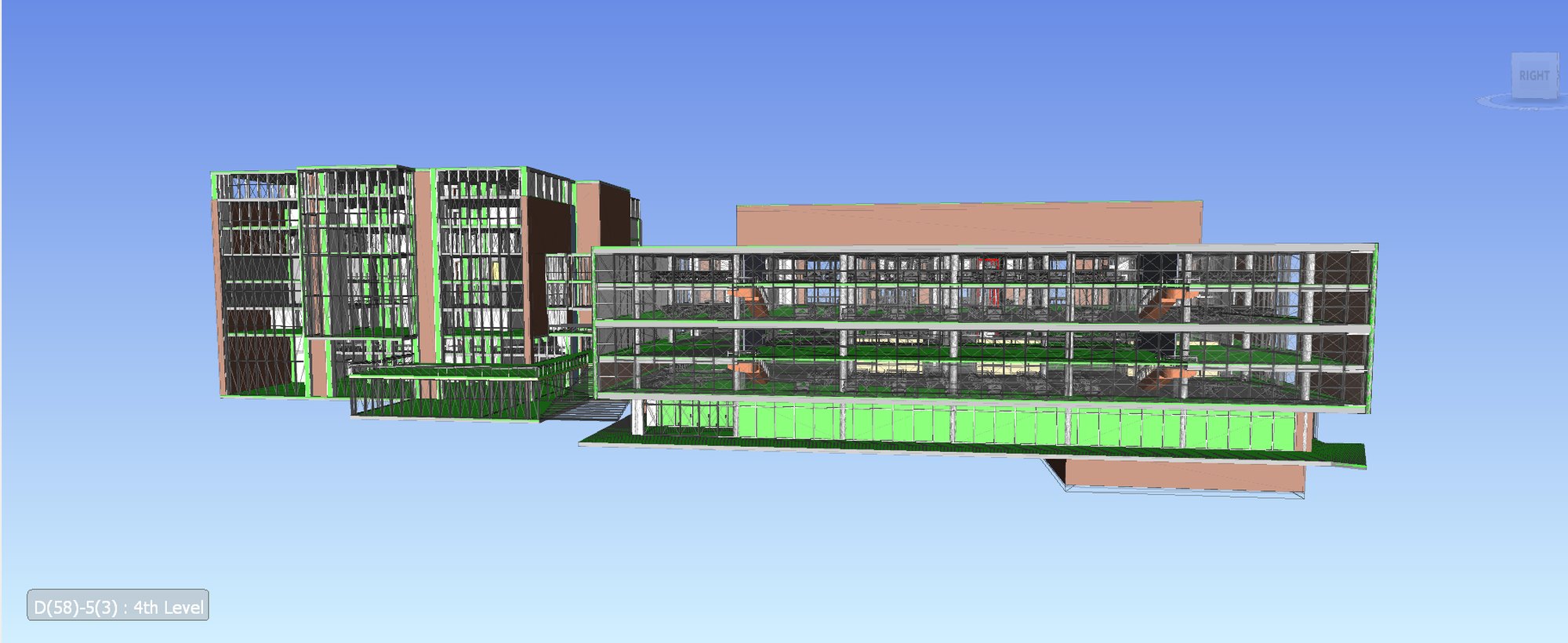
Clash detection across a federated building model
Clash detection, federated model

Every green element is a place where two disciplines’ designs collide: a duct through a beam, a pipe through a column. Caught here, on screen, each one costs minutes. Discovered on site, the same clash costs rework, idle crews and schedule, which is why projects that skip model coordination pay for it later, with interest. Finding clashes is a software problem. Deciding who carries the cost of the ones nobody found is a contract problem.

Peer-reviewed research

Schedule Delay in Construction Delivery Methods Under Extreme Uncertainty

Seventeen non-residential projects compared across four delivery methods using a normalised Uncertainty Schedule Delay Index, built from publicly verifiable disruption records. Accepted without amendment by three independent reviewers.

IGLC 34Lean Theory track
pp. 655–667Scopus-indexed, open access
DOI 10.24928/2026/0315 →
What it says about risk allocation →
Applied work

A digital twin for a deck at the world’s busiest airport

Hartsfield-Jackson’s West Parking Deck runs around the clock for a population that arrives in waves, and it is quietly becoming one of the largest concentrations of electric-vehicle charging load the airport owns. A model built hands-on with a project team, and on top of it a data architecture and an operator interface built end to end, including the part that decides what the twin is never permitted to override.

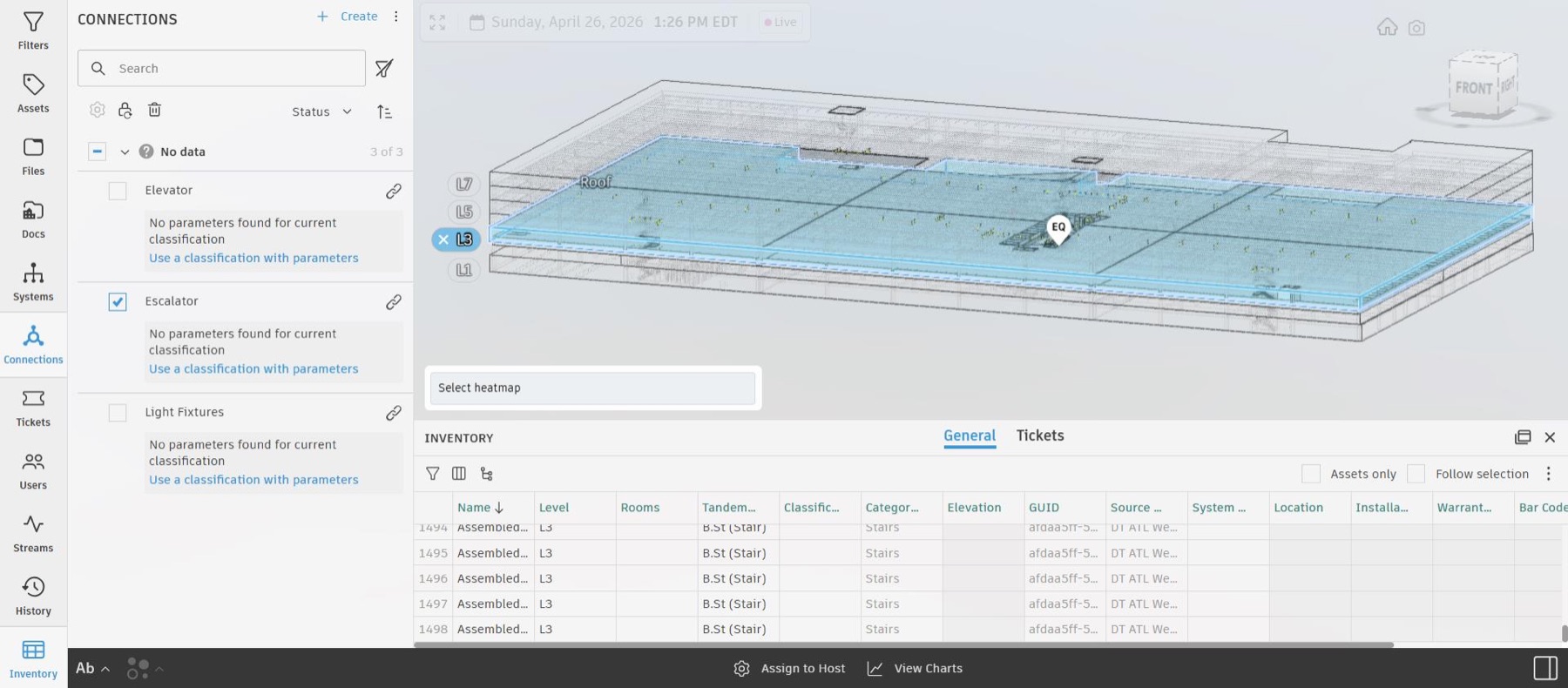
Every bay, column and fixture modelled as its own object, so energy can be attributed by zone.
A charging position against the structure, and the electrical room it draws from.
Digital twin platform showing the tagged asset inventory for the parking deck
The asset inventory. Every row is an element carried across from the model with its own identifier, its level, and its source file. This table, not the three-dimensional view, is what an operations team actually inherits.
Read the work →

Decide, Then Contract

What the money must buy, decided by function and life-cycle cost; then who carries which risk, decided in the delivery contract. Chapters 01 and 02.

Information That Survives

One coordinated description of the work while designing, governed while building, and kept alive for decades of operation. Chapters 03, 04 and 05.

The Arriving Technologies

Machine learning, robotics and reality capture are on site; the rules for them are not. Writing those rules is Chapter 06.

Why this matters

An industry that has not gotten more productive in half a century is about to build more than it ever has.

LABOUR PRODUCTIVITY, UNITED STATES 1945 1960 1975 1990 2005 2020 Manufacturing, retail, agriculture up to 1,500% since 1945 Construction still at roughly 1968 levels
United States labour productivity. Construction has stayed near its 1968 level while other sectors rose by as much as 1,500 percent since 1945. McKinsey Global Institute.
HOW DEEP AUTOMATION CAN REACH proprietary open source Interface automation scripts, macros, add-ins reachable reachable Published API read and write through a vendor contract reachable reachable Business logic how the system decides, not just what it stores closed reachable Data schema what an object is, what fields exist, who may see them closed reachable Engine the rules the software itself runs on closed closed The line between the third and fourth row is where the difference stops being technical and starts being economic.
Automation reaches only as far as a system lets it. The layers a vendor keeps closed are the ones that decide whether a firm can adapt the software to its own work, or has to pay someone else to. Read the analysis.
THE BUILDOUT, MEASURED $50.7 billion annual rate of private data-center construction, April 2026, passing office construction for the first time $50.7B Data centers $43.8B Offices Census C30. Executive Order 14318 (2025) designates data centers over 100 MW or $500M as federal priority projects.
Private data-center construction at a $50.7 billion annual rate (Census C30, April 2026), passing general office construction ($43.8 billion). Executive Order 14318 designates data centers over 100 MW or $500 million as federal priority projects.
CONDITION OF U.S. INFRASTRUCTURE C overall grade, 2025 American Society of Civil Engineers 2025 Report Card for America's Infrastructure Federal buildings on the GAO High-Risk List for more than two decades, for deferred maintenance and lifecycle management failures Assets that were never governed as information are the hardest and most expensive ones to keep running.
The condition of what already exists. American Society of Civil Engineers, 2025 Report Card, which raised the overall grade from the C- awarded in 2021. Federal real property has been on the Government Accountability Office High-Risk List since January 2003.
WORKERS THE INDUSTRY MUST ATTRACT 349,000 above the normal pace of hiring, to meet 2026 demand Associated Builders and Contractors, construction workforce model, January 2026. The same model projects 456,000 for 2027 as spending growth resumes. Industry surveys report digital modelling and integrated delivery among the hardest roles to recruit.
The people available to build it. Associated Builders and Contractors workforce shortage model, 2025. The concentration of that shortage in digital modelling and integrated delivery roles is reported by industry surveys rather than by the quantitative model, which classifies labour by standard occupational codes.
LARGE PROJECTS, TRADITIONAL DELIVERY Schedule +20% longer Budget up to +80% over budget as planned Agarwal, Chandrasekaran & Sridhar, McKinsey & Company, 2016. The McKinsey Global Institute (2017) separately identifies rewiring the contractual framework among seven actions that could raise productivity by 50 to 60 percent.
Performance of large projects under traditional, non-collaborative delivery.
COST OF INADEQUATE INTEROPERABILITY, PER YEAR $10.6 billion borne by owners and operators, after handover $5.2bn during delivery Two thirds of the cost of bad information is paid by whoever inherits the building, which is the party with no seat at the table when the information is structured. $15.8 BILLION TOTAL · NIST GCR 04-867 · 2002 DOLLARS
The annual cost of information that does not survive the handover, and who pays it.

These figures describe one problem from several angles: an industry that has not gained productivity in half a century, infrastructure already graded C, a workforce shortfall in exactly the competencies required, and the largest capital deployment in modern memory arriving on statutory deadlines. The technology to address it exists and is documented in public standards. What is missing is the governance layer that makes anyone responsible for using it.

Work

Applied projects
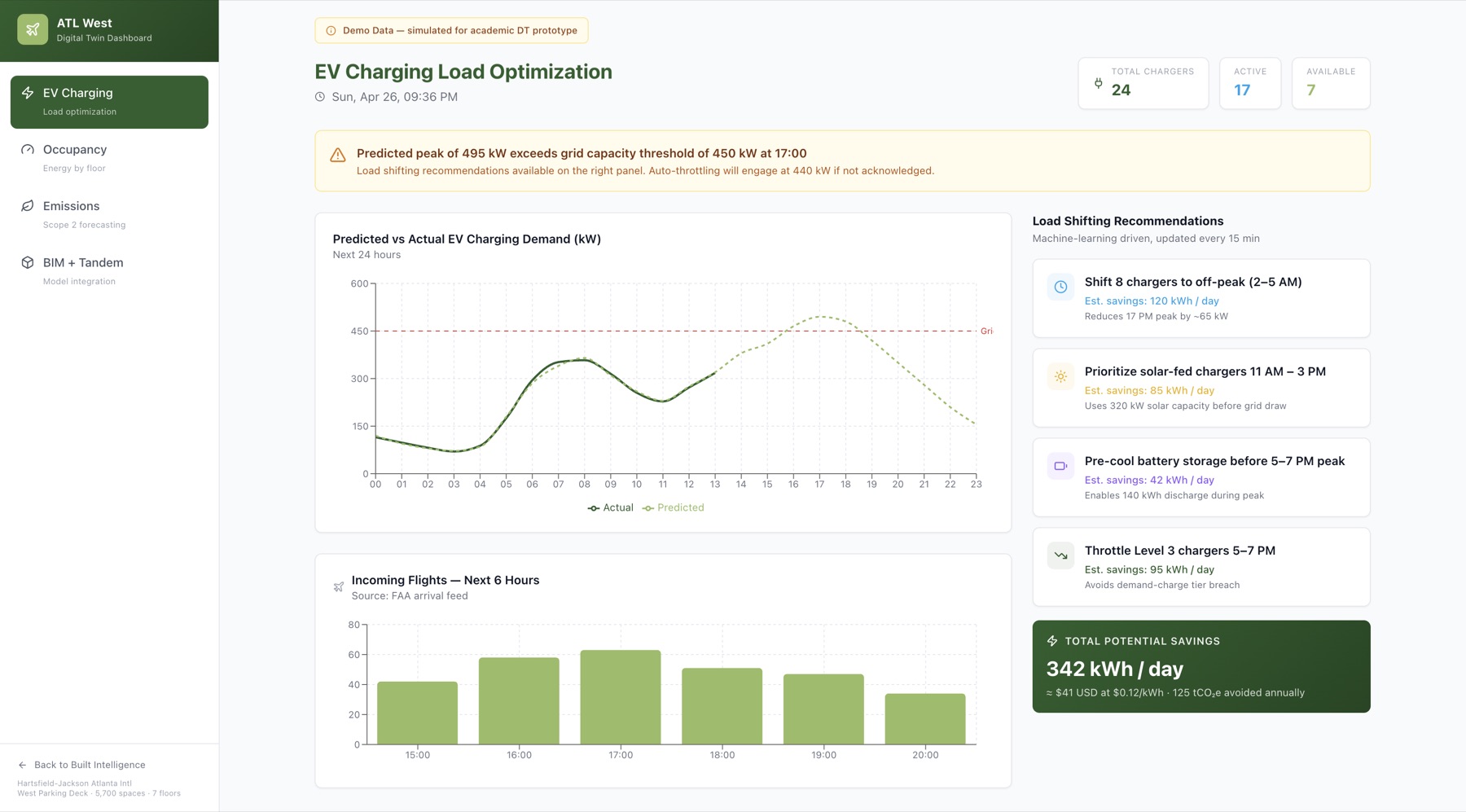
Digital twin, airport parking deck

Digital twin, airport parking deck →

Facility-manager interface for a digital twin of the West Parking Deck at Hartsfield-Jackson, forecasting electric-vehicle charging load against the deck’s grid ceiling. Figures are simulated: the exercise had no access to the live meters.

Atlanta · 2026
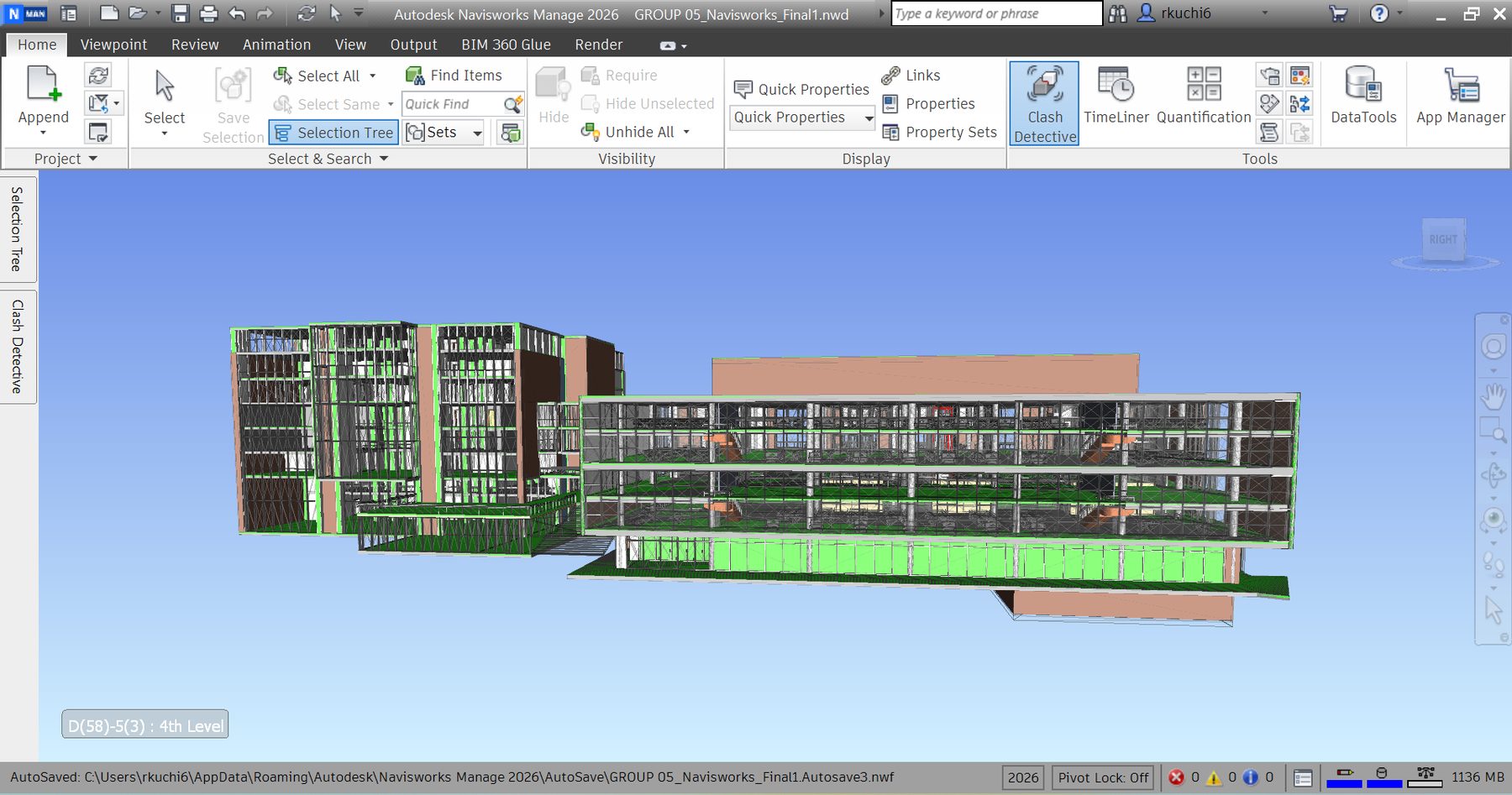
Federated model, clash detection

Federated model, clash detection

Interference detection across architectural and structural models of a university library and tower, run in Autodesk Navisworks Manage. Coordination failures are cheapest to resolve here, and most expensive once they are built.

2026
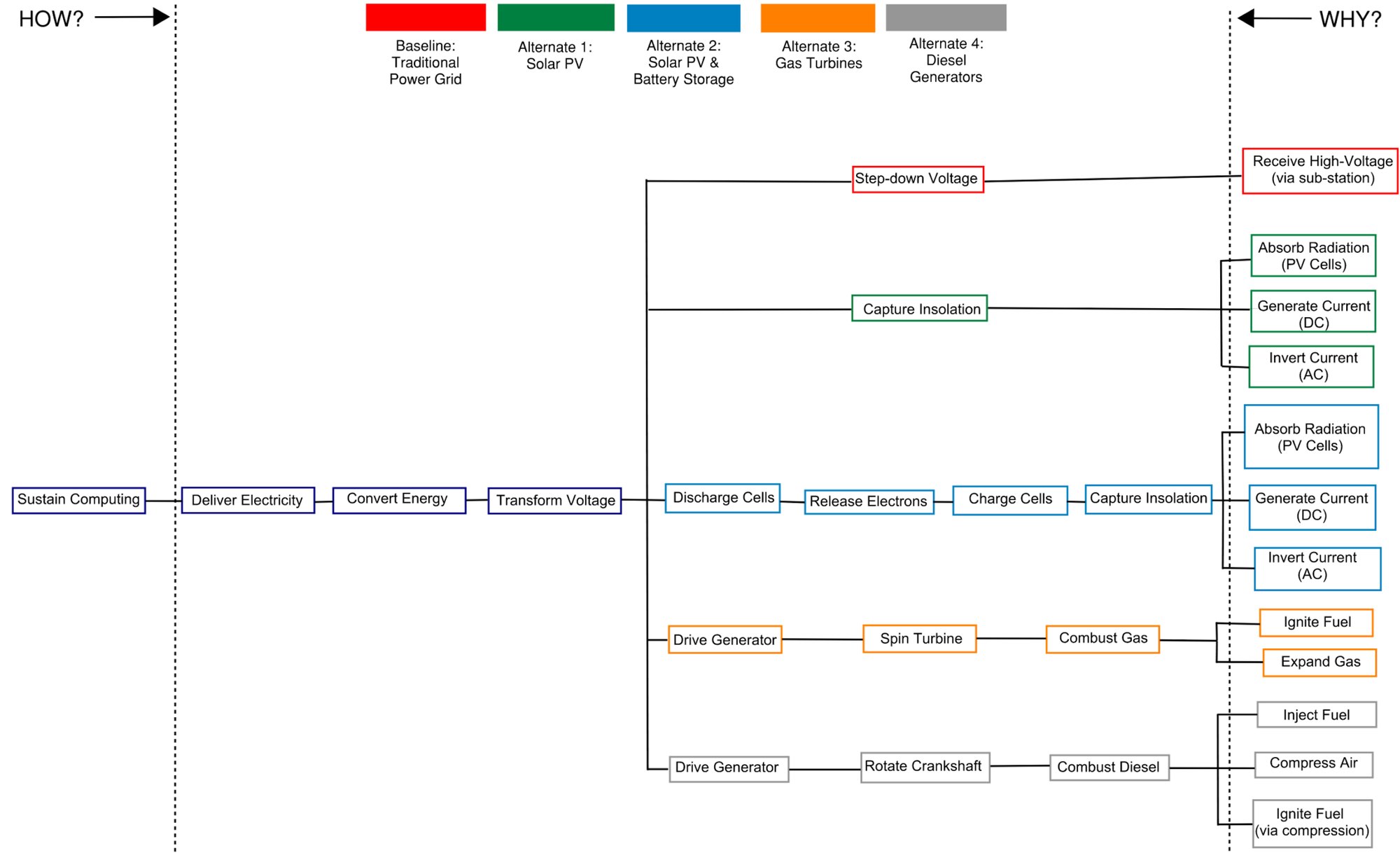
Function analysis, power infrastructure

Function analysis, power infrastructure

FAST decomposition of electrical supply for a 150 MW hyperscale data centre, comparing grid, solar photovoltaic, solar with battery storage, gas turbines and diesel generation, function by function, before any of them is costed.

2026
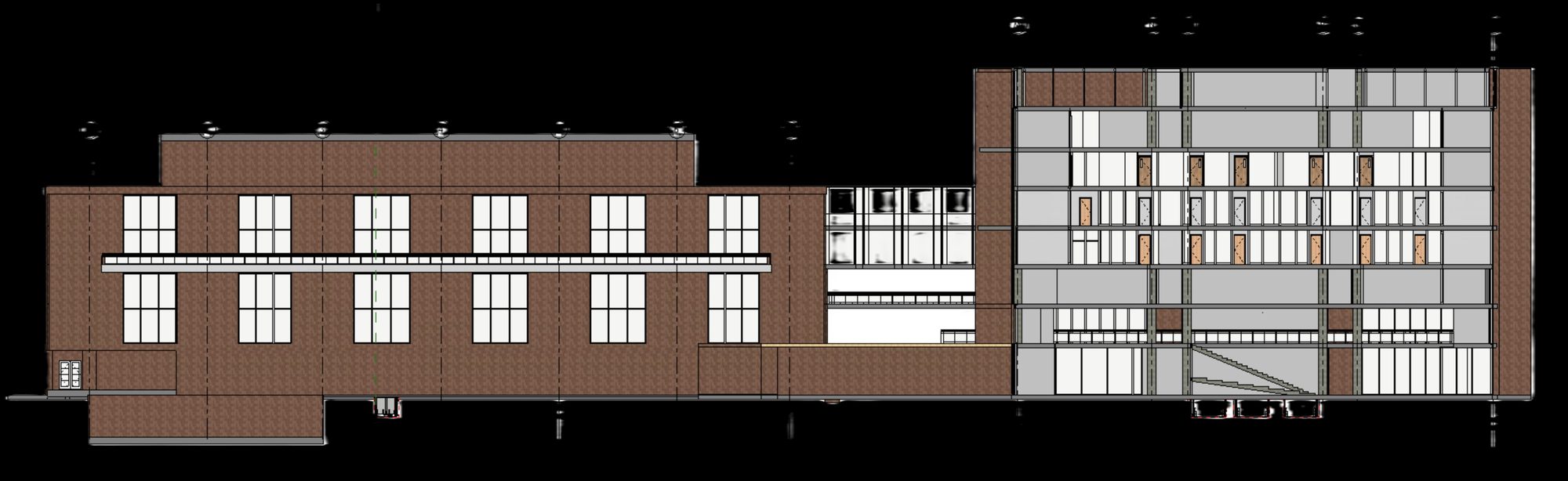
Model section, whole building

Model section, whole building

Longitudinal section cut from the federated model, showing structure, levels and vertical circulation. The model is the coordination instrument; the drawing is only a view of it.

2026

Why this perspective

10yrs
Contract practice before the engineering

A decade structuring agreements, allocating risk and running corporate governance for commercial real estate, then a Master of Science in Building Construction and Facility Management at Georgia Tech to work on the technical side of the same problem.

17projects
Research that survived peer review

Seventeen non-residential projects compared across four delivery methods, published in the Scopus-indexed proceedings of IGLC 34 after three reviewers recommended acceptance without amendment.

80units
Governance running in production

Permissions by role, visibility rules at the level of the individual record, and accounting periods locked so that closed months cannot be altered by anyone. Live across twelve buildings held by several distinct owners.

Applied validation

Methodology is refined by contact with real projects. Selected engagements, such as information governance assessment, BIM execution planning, digital delivery compliance review against federal requirements, and construction-to-operations continuity strategy, serve as validation pilots for the frameworks published here, and what they surface is folded back into the next revision. This is technical and methodological work. Any contractual instrument arising from a project is drafted by counsel licensed in that jurisdiction. How this work is structured.

Terms used on this page

Short definitions for the acronyms and terms of art above. The complete vocabulary is in the A–Z glossary.