Information Governance for Collaborative Delivery
Version 1.0 · August 2026
Influence over cost is highest when information is scarcest. Value management is the discipline of deciding well anyway, and of showing the work.
Multi-party agreements are contractual instruments before they are collaboration philosophies. Where the risk sits is a drafting decision, most projects discover theirs during a dispute, and schedule and cost are where the discovery gets expensive.
The most consequential construction technology of the last two decades is not a machine. It is the shift from drawing a building to modelling it, and from arguing about documents to coordinating one description of the work.
Standards describe what good information looks like. Governance determines whether anyone is obligated to produce it. Most projects have the first and not the second.
A digital twin is only as useful as the discipline of the data flowing into it. Most fail not at the modelling stage but at the moment responsibility for the information changes hands.
The technology works. What stops it is unresolved liability, absent standards, data security exposure and a fragmented supply chain. Every one of those is a governance problem, not a technical one.
Chapter 04 of 6 · While building: govern who decides about information
Standards describe what good information looks like. Governance determines whether anyone is obligated to produce it. Most projects have the first and not the second.
Information governance is the set of rules that decides who creates a project’s information, who may see it, who approves it, and what happens to it after the building is finished. Construction is one of the few industries whose product outlives its makers by decades: the building’s data has to stay reliable long after the companies that produced it have demobilised. When that information is lost or wrong, the owner pays for it every year the building operates. That is why this discipline matters as much as the concrete.
The National Institute of Standards and Technology estimated the annual cost of inadequate interoperability in the U.S. capital facilities industry at approximately $15.8 billion in 2002 dollars, roughly two-thirds of it borne by owners and operators, predominantly during operations and maintenance. The cost of information failure is paid mostly by whoever inherits the building.
This failure persists on projects that did everything the technology literature recommends. Pishdad-Bozorgi, Gao, Eastman and Self documented a $113 million, 200,000 square foot university research facility that had a formal BIM Execution Plan, required COBie, and operated under a collaborative delivery philosophy, and whose automated import into the maintenance management system still failed at handover (Automation in Construction, 87, 22–38). The cause was not a missing standard. It was the absence of early lifecycle data governance and a schema that did not align with the receiving system.
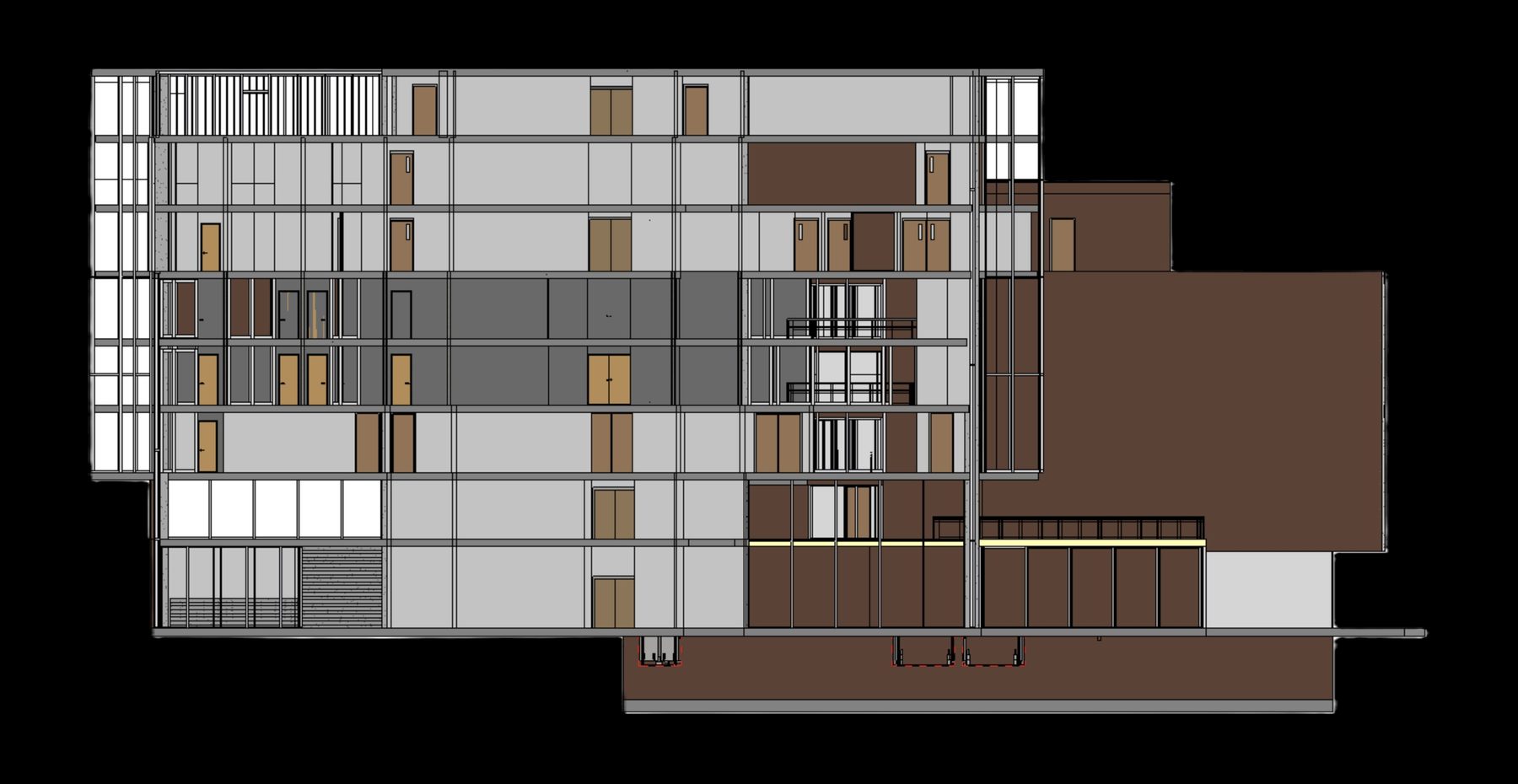
The requirement landscape
Digital delivery on U.S. public work is not an emerging trend to be watched. It is a procurement requirement with more than twenty years of history, thresholds in square feet and dollars, and deliverables written into contracts. And the firms it now reaches are precisely the ones least equipped to interpret it.
The General Services Administration, the federal government’s civilian landlord, established the National 3D-4D-BIM Program in 2003 through its Public Buildings Service. The first hard requirement followed for fiscal year 2007: “a spatial program BIM will be the minimum requirement for all major (new and modernization) projects” submitted for final concept approval. The current facilities standard, P100 (2024), states the present tense plainly: “GSA has required the use of BIM in design and construction in various ways since the 2009 P100,” and today “all new-construction, major repair and alteration projects are required to submit BIM deliverables throughout the project period, at multiple milestone points …”, with an Industry Foundation Classes-based submission required alongside each native-format submission. A numbered guide series, seven of them published, accompanies the program; Guide 08 (2011) extends the requirement past construction into facility management data.
On the defense side the requirement is broader and newer. The U.S. Army Corps of Engineers’ ECB 2018-7 (current revision September 2025) is categorical: “The use of advanced modeling processes and related technologies for design and construction are required as described herein.” The thresholds are concrete: military projects over 5,000 gross square feet and $3 million, and civil works projects over $3 million, must comply. Compliance is contractual, not aspirational: the Corps’ contract language, its Project Execution Plan template and its Minimum Modeling Matrix “must be incorporated into all projects that meet the minimum thresholds …” and for architect-engineer designed work the modeling execution plan “is a required submittal.” Deliverables run from native design models through “record drawings (PDF) and BIM and/or CIM record models through construction completion.” In May 2026 the Corps consolidated the practice in a dedicated engineer manual, EM 1110-1-4017, Advanced Modeling for Digital Project Delivery: the execution plan “must be included in the Design Analysis” for all projects, and record models “must reflect all approved changes during construction including red-lines, requests for information, and contract modifications …”
Beneath both agencies sits a consensus national standard. The National BIM Standard-United States, published by the National Institute of Building Sciences, reached Version 4 in 2023 with four modules: project BIM requirements, BIM execution planning, BIM use definitions, and COBie Version 3, the construction-to-operations information exchange. COBie’s stated purpose is the exact failure this practice area exists to prevent: capturing and delivering asset data “with the goal of reducing or even eliminating the delay between handover (after design and construction) and when the facilities management system can begin the operations and maintenance of those maintainable assets.”
Every document above specifies deliverables. None of them, by itself, produces the governance that makes deliverables trustworthy: the peer-reviewed record includes a $113 million facility with a formal BIM execution plan, COBie required, and a collaborative delivery philosophy, whose automated handover into the maintenance system failed anyway (Pishdad-Bozorgi, Gao, Eastman & Self, Automation in Construction, 2018). The lesson generalises: a requirement without an owner, a verification step and an access regime is a format, not a governance system. Read as governance, the federal stack maps exactly onto the decision chain this area sets out: information requirements belong in the appointment; the execution plan is the delivery team’s binding response; the common data environment needs defined states and authorities; and handover data is derived from what operations will need, not from what was convenient to model. That translation, from mandate to decisions a project team can actually make, is the work of this practice area, and it matters most for the small and mid-sized firms that now meet these requirements on federal work without a BIM department to interpret them.
The gap between mandate and governance has a legal literature of its own, and it says what this chapter says, from the profession that litigates the failures. A published legal analysis of the ISO 19650 series (Winfield, 2020, in the Institution of Civil Engineers’ Management, Procurement and Law) credits the standard as “a game changer in standardising the process of digital information management,” and then draws the line that matters: the series was “written primarily by technical, rather than legal, authors.” Her working example is the status codes of the standard’s UK National Annex, under which a “shared” information container is labelled non-contractual and a “published” one contractual, even though “the term ‘non-contractual’ is not used in the normal legal context”: unless the contract itself states which containers amount to deliverables, the labels cannot be relied on, and the analysis sees “confusion, potential delays and additional costs” where that allocation is missing, precisely what this chapter’s decision chain exists to prevent. Her verdict is the sober one: the standard “should not be considered the panacea,” because it “does introduce some potential legal uncertainties of its own” that must be resolved through binding contractual terms. A technical standard and a contract are written in different languages. Information governance is the discipline of making them say the same thing.
GSA, National 3D-4D-BIM Program (established 2003) and GSA BIM Guide Series 01 (2007); GSA, P100 Facilities Standards for the Public Buildings Service (2024); GSA, BIM Guide 08 · Facility Management (2011); USACE, ECB 2018-7 Rev. 3, Advanced Modeling Requirements on USACE Projects (2025), citing WRRDA 2014 §1034 as statutory basis; USACE, EM 1110-1-4017, Advanced Modeling for Digital Project Delivery (2026); NIBS, National BIM Standard-United States V4 (2023), including COBie V3; Pishdad-Bozorgi, Gao, Eastman & Self, Planning and developing facility management-enabled building information model (FM-enabled BIM), Automation in Construction 87, 22–38 (2018); Winfield, Construction 4.0 and ISO 19650: a panacea for the digital revolution?, Proceedings of the Institution of Civil Engineers, Management, Procurement and Law 173(4), 175–181 (2020). Quotations are verbatim from the cited documents; links are to documents live on the issuing agencies’ sites at the time of writing.
The three enforcement mechanisms described here (role-based permission, record-level visibility, and immutability of closed states) are not theoretical: the author administers all three in production, in an operation where several parties with divergent interests share information that has to remain reliable. The synthesis published in this area translates that discipline into decision form for U.S. project delivery.
Version 1.0 · August 2026
Short definitions for the acronyms and terms of art above. The complete vocabulary is in the A–Z glossary.